
Q&A with ENM Program Director Dr. Eric Bickel
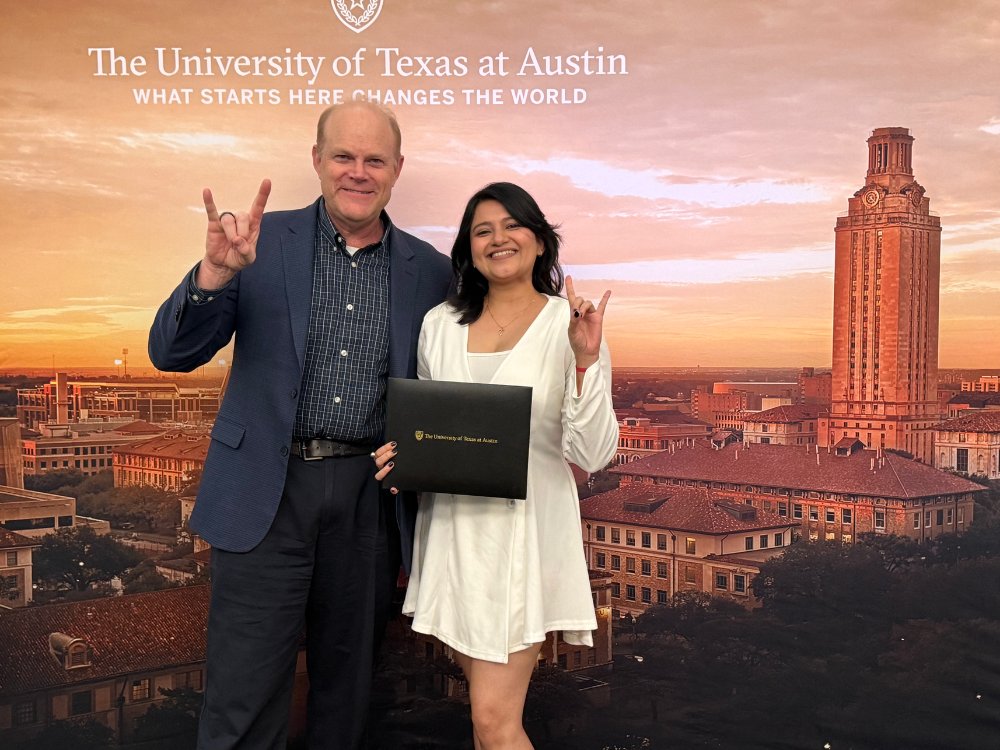
The Engineering Management (ENM) program at Texas Engineering Executive Education (TxEEE) is a graduate degree from the Cockrell School of Engineering for engineers moving into leadership roles. Students attend one intensive weekend per month, so they can earn the degree while working full-time.
Dr. Eric Bickel is the Program Director of the Engineering Management program and a professor at the Cockrell School of Engineering. In addition to his leadership role, he teaches courses in decision analysis and strategic decision-making. He works with faculty to ensure the program remains rigorous, relevant, and applicable to engineers as they transition into management roles. He has worked in academia and industry for over 30 years, and his current research focuses on decision analysis, uncertainty, and probabilistic modeling to improve how organizations represent and make decisions under uncertainty.
As engineers advance in their careers, their responsibilities change beyond the technical side of their work. Dr. Bickel aims to help engineers develop the skills they need to lead, communicate, make decisions under uncertainty, and think strategically. His goal is not simply to teach engineers about management, but to help them become leaders and decision makers while keeping the analytical rigor that made them successful as engineers.
“As engineers advance in their careers, their value increasingly comes not just from solving technical problems, but from making good decisions about people, projects, investments, technologies, and strategy.”
Dr. Eric Bickel
About the Program:
Why should an engineer pursue an Engineering Management master’s degree instead of an MBA?
An MBA and an Engineering Management degree serve somewhat different purposes. An MBA provides broad business education and can be an excellent choice for someone who wants to develop general management skills that apply across industries and functions, including finance, marketing, and general management.
The ASEM certified degree is designed for people who want to build on their technical background rather than leave it behind. Our students learn many of the same fundamental business and leadership skills, including finance, strategy, leadership, project management, and decision making, but they learn them in the context of managing technology, engineering projects, and technical organizations.
For an engineer who wants to lead technical teams, manage complex projects and programs, or eventually assume broader responsibility for a technology-based organization, Engineering Management can provide a more direct bridge from technical expertise to leadership.
What distinguishes UT Austin’s Engineering Management program from other engineering management programs?
One of the most important distinctions of our program is its emphasis on decision-making and critical thinking. As engineers advance in their careers, their value increasingly comes not just from solving technical problems, but from framing the right problems, evaluating information critically, and making good decisions about people, projects, investments, technologies, and strategy, often in situations involving significant uncertainty and competing objectives. These capabilities are becoming even more important in the age of AI, when managers must be able to assess the quality of information and analysis rather than simply accept the output of increasingly powerful tools.
The program is also designed specifically for working professionals. The one-weekend-per-month format allows students to bring current problems and experiences from their jobs into the classroom and then immediately apply what they learn back at work.
Students also learn alongside other experienced technical professionals. Much of the learning comes not only from the faculty, but from classmates who bring perspectives from different industries, engineering disciplines, organizations, and roles. The result is a program that combines the analytical rigor of engineering with the critical-thinking, business, leadership, and decision-making skills needed to take on larger responsibilities.
What skills does ENM develop to help engineers transition into management and leadership?
The transition from engineering to management requires a significant change in perspective. As an engineer, you are often responsible for solving technical problems. As a manager, you are responsible for making decisions and achieving results through other people.
ENM develops skills in leadership, communication, finance, project management, strategy, decision making, and managing uncertainty and risk. Students learn how to frame complex problems, evaluate alternatives, work across organizational boundaries, communicate recommendations, and make decisions when the available information is incomplete.
The objective is to complement a student’s technical expertise with the business and leadership skills needed to take responsibility for larger projects, teams, and organizations.
How can students apply what they learn in ENM to their current jobs?
Engineering managers operate at the intersection of technology, people, and businesses.
The ENM program gives students frameworks and tools for approaching those situations systematically. Ideally, students can take something they learn during an ENM weekend and then apply it at work the following Monday.
How is AI changing engineering management, and how is it addressed in the ENM curriculum?
AI is rapidly changing both engineering work and engineering management. Engineers can increasingly use AI to assist with analysis, coding, design, documentation, research, and other technical activities. For managers, this creates a different challenge: determining where AI creates value, how it changes workflows and staffing, how its output should be evaluated, and what risks arise from relying on it.
AI also makes judgment more important, not less important. Managers need to understand when an AI-generated analysis is useful, when it needs to be challenged, and who remains accountable for the resulting decision.
These issues are increasingly incorporated into our courses and discussions. Because technology is changing so quickly, I believe it is important that AI be integrated throughout the curriculum where appropriate rather than treated solely as a stand-alone topic.
What does the workload of the program look like?
The program is designed for working professionals, so we recognize that students are balancing graduate school with demanding careers and personal responsibilities.
Students should expect a rigorous graduate engineering program, including readings, assignments, team projects, and preparation outside the classroom. At the same time, the format is specifically designed to make completing the degree feasible while continuing to work full time.
What kinds of positions in management can graduates pursue after completing the program?
The degree can support a range of career paths, depending on a student’s technical background and experience. Examples include engineering manager, technical program manager, project or program manager, product manager, operations manager, technology manager, and other technical leadership positions.
For more experienced professionals, the degree can also help prepare them for broader organizational leadership roles, such as director or vice president positions involving engineering, technology, operations, or related functions.
What is the return on investment in an Engineering Management degree?
I think about the return on an Engineering Management degree more broadly than simply the salary someone earns immediately after graduation. The real return is increasing the scope of what you are prepared to do in your career.
Engineers are typically very good at solving technical problems. As they advance, however, their success increasingly depends on their ability to lead people, manage projects and organizations, understand financial and strategic implications, and make difficult decisions under uncertainty. Developing those capabilities can open opportunities for positions with substantially greater responsibility, influence, and impact.
There is also value in developing these skills deliberately rather than acquiring them solely through years of trial and error. Our students can apply what they learn immediately in their current jobs, while preparing themselves for the next stage of their careers.
Who is the ENM program best suited for?
The program is particularly well suited to engineers and other technical professionals who want to expand their responsibilities beyond an individual technical role.
That includes engineers who are beginning to lead teams or projects, technical professionals moving toward program or product management, and experienced engineers preparing for broader organizational leadership.
The strongest fit is generally someone who has established a solid technical foundation and now wants to increase the scope and impact of their career.
Application Related
What advice would you give an engineer who is interested in management but isn’t sure they’re ready to make the jump into our ENM degree?
You do not need to be a manager to benefit from the program. In fact, one of the best times to develop management and leadership skills is before you are given significant management responsibility.
I would ask yourself where you want your career to be in five or ten years. If you want to lead technical teams, manage major projects, influence organizational decisions, or eventually move into senior leadership, developing these skills early can be extremely valuable.
You also do not have to give up being technical. Some of the most effective engineering leaders are people who combine strong technical judgment with an understanding of people, organizations, economics, and decision making.
What makes a strong application? What should students consider when applying?
We look for evidence that an applicant can succeed academically and will benefit professionally from the program. A strong undergraduate academic record is important, but we also look carefully at professional experience, career progression, technical accomplishments, and evidence of initiative and responsibility.
The statement of purpose is particularly useful when it clearly explains why the applicant wants an Engineering Management degree, what they hope to do with it, and why this is the appropriate point in their career to pursue it.
We are looking for people who will contribute to the classroom as well as learn from it. Because our students are working professionals, their experiences have become an important part of the educational environment.