

FE Exam Prep: Fundamentals of Engineering
FE Exam Prep — Fundamentals of Engineering has a 10+ year history of successfully preparing graduating and recently graduated engineering students, as well as professional engineers, to take the NCEES Fundamentals of Engineering (FE Exam), also referred to as the Engineer-in-Training Exam (EIT).
FE Exam Prep is held on four consecutive Saturdays starting Feb. 7 (8-hours each day), with multiple breaks. The sessions are taught by top instructors from the Cockrell School of Engineering. The synchronous online format (Zoom) allows participants to ask professors detailed questions in real-time. The sessions are recorded so students can review the study sessions and material later.
Faculty will review and explain sample questions and test-taking tips on:
- Electrical Circuits
- Mathematics Part I and Mathematics Part II
- Fluid Mechanics and Chemistry
- Mechanics of Materials
- Statics and Dynamics
- Thermodynamics
- Economics
- Materials Science
- Ethics
A credit card must be used at the time of payment. Please contact epd@engr.utexas.edu for additional payment methods. If you have any issues with the shopping cart, please email epd@engr.uexas.edu for assistance.
Cohorts begin the first Tuesday of every month, starting November 3, 2026.
Dates: Saturdays Feb. 7-28, 2026
Location: Live Online
Registration Coming Soon
Time: 8 a.m. – 4 p.m. CT
Price: Individual Student
Student Rate: $299
UT Austin Alumni: $399
Public Rate: $499
Corporate / University Partners
•10–24 seats: $425 per seat
•25–49 seats: $375 per seat
50+ seats: Custom pricing — contact us at epd@engr.utexas.edu
This course is designed for:
- Engineering students preparing to take the FE exam
- Recent engineering graduates beginning the licensure process
- Working professionals returning to FE exam preparation after time away from school
- Students preparing for the FE Mechanical exam, FE Civil exam, or FE Other Disciplines exam
- Professionals who want a structured review of core engineering fundamentals
By the end of this course, learners will be able to:
- Describe the structure, timing, and expectations of the FE exam
- Identify the FE exam pathway that best matches your academic or professional background
- Navigate and use the NCEES FE Reference Handbook more effectively during problem solving
- Review core engineering concepts commonly tested on the FE Mechanical, Civil, and Other Disciplines exams
- Apply fundamental engineering principles to FE-style practice questions
- Select appropriate equations, tables, and reference material from the FE Reference Handbook
- Recognize common mistakes in FE problem solving
- Use time-management and test-taking strategies for computer-based FE exam questions
- Build a personalized study plan based on exam discipline and topic strengths or weaknesses
This is a cohort-based online course delivered through Canvas LMS, with shared review content and exam-specific practice pathways. New cohorts begin the first Tuesday of every month, starting November 3, 2026. To complete this course, you must:
- Complete all assigned modules
- Complete the exam preparation section
- Complete the shared knowledge review modules assigned to your selected pathway
- Complete the practice question section for your selected FE exam
- Complete module quizzes or knowledge checks, if assigned
Time commitment: TBD
Access period: TBD
Learners can move through the course in order or focus on the topics most relevant to their FE exam discipline.
1. Exam Preparation and Rules: Introduces the FE exam experience, including exam format, timing, computer-based testing expectations, calculator considerations, question types, time-management strategies, and effective use of the FE Reference Handbook.
2. Knowledge Review: Reviews core engineering concepts organized into 12 topic modules. Each module includes topic explanations, key formulas or concepts, common mistakes, and knowledge checks.3. Practice Questions: Provides exam-focused practice questions organized by discipline pathway. Choose the practice question path that matches your target exam:
This depends on the requirements of the state in which you would like to eventually be licensed. For example, Texas does not require that you take an exam in any given specific discipline. It is suggested that you take the exam that best fits your knowledge and experience.
Contact your state’s Licensing Board to learn more about whether you are required to take the FE Exam in each discipline.
No, attendance is not mandatory. The decision to attend all or only a subset of the subjects is up to you. If you miss a session, you will still receive the training materials for that day and will have access to the recording for an allotted amount of time. We encourage leaving your camera on during class, as that helps the faculty member with teaching when they are able to see students.
You can obtain a FREE copy through the National Council of Examiners for Engineering and Surveying: https://account.ncees.org/login.
Note that you must register for an account and login to download the handbook.
Passing the FE Exam is your first step to becoming a professional engineer and kickstarting your career. While you will be able to use the NCEES handbook as a reference during the exam, you still need to be prepared and familiar with the information as you would any other big assessment. Taking an exam prep helps solidify your knowledge and increases your chances of passing the exam.
This FE Exam Prep is taught by world-class UT engineering faculty. Students can work through problems with instructors and ask questions as needed, which is not typically provided by other prep courses. This refresher course is broken into digestible sections to help optimize students’ retention and absorption of the review material. This course also gives students the flexibility to pick and choose which sessions to attend, allowing students to focus on what areas they need to focus on while still receiving information for all sections of the exam. All sessions are recorded and are made available to students for later viewing, allowing them to refer back to the test prep while studying individually.
Email: epd@engr.utexas.edu for more information.
Meet the Instructors

Ronald Bell
Engineering Scientist
UT Austin Applied Research Laboratories
Area(s) of Expertise:
Engineering systems, engineering education, engineering management, and field engineering
Educational Qualifications:
Ph.D., University of South Florida-Tampa, Electrical Engineering–1995
B.S. and M.S.,University of Missouri-Columbia,–Electrical Engineering–1991 and 1993
Technical Interests:
Systems engineering
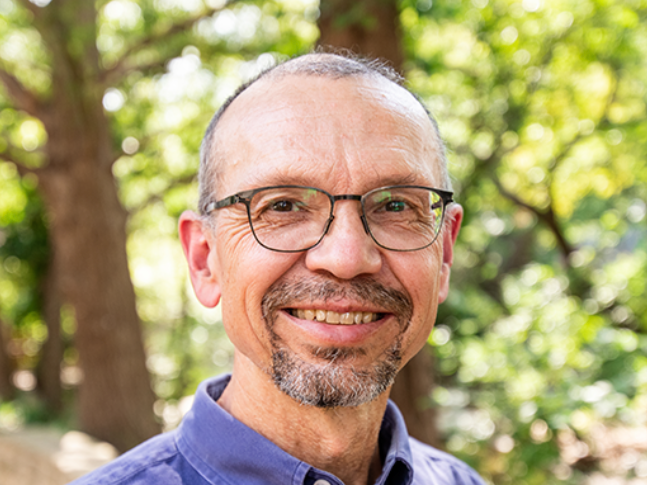
Matthew Hall
Professor
Louis T. Yule Fellowship in Engineering
Department Research Areas:
Engine Combustion Processes, Thermal Fluids Systems and Transport Phenomena
Educational Qualifications:
B.S. and M.S. Mechanical Engineering. University of Wisconsin,
Ph.D. in Mechanical and Aerospace Engineering, Princeton University.
Post-doctoral positions at Sandia National Laboratories’ Combustion Research Facility and the University of California-Berkeley.
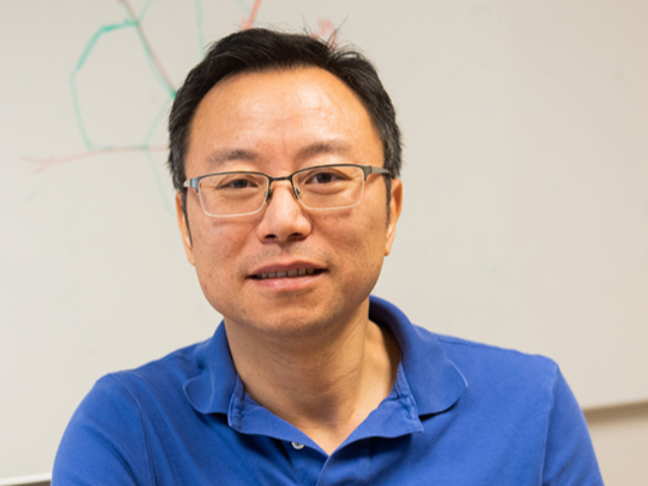
Rui Huang
Professor
Bettie Margaret Smith Professorship in Engineering
Area(s) of Expertise:
Solids, Structures and Materials
Education:
B.S. Theoretical and Applied Mechanics, University of Science and Technology of China, 1994
Ph.D., Civil and Environmental Engineering, Princeton University, 2001
Research Interests:
- Nonlinear mechanics of hydrogels and soft materials
- Mechanics of graphene and 2D nanomaterials
- Thermomechanical reliability of advanced packaging for microelectronics
- Mechanical instability of thin films and nanostructures
- Computational mechanics, multiscale modeling and simulations

Chad M. Landis
Professor, Department Associate Chair
T. U. Taylor Professorship in Engineering
Department Research Areas:
Solids, Structures and Materials
Education:
Ph.D.. University of California at Santa Barbara, 1999
Research Interests:
- Mechanics of materials
- Ferroelectrics
- Ferromagnetic shape memory alloys
- Fracture Mechanics
- Continuum thermodynamics
- Computational Mechanics
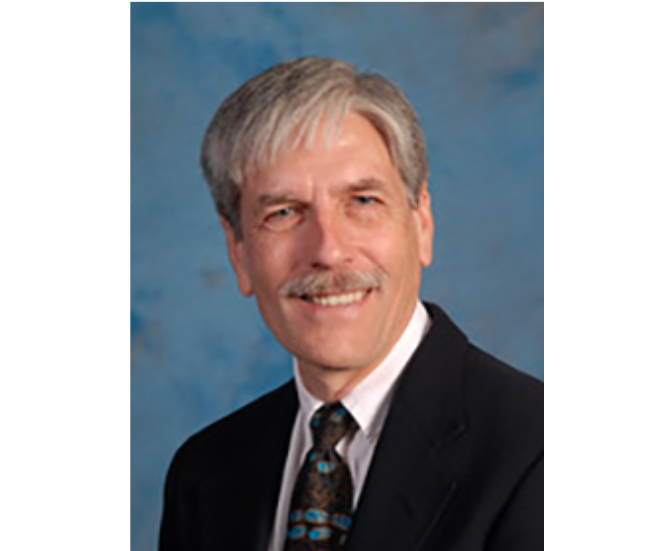
Howard Liljestrand
Associate Chair for Environmental Engineering & Professor
Area(s) of Expertise:
Environmental and Water Resources Engineering
Educational Qualifications:
Ph.D., California Institute of Technology, Environmental Engineering Science, 1980
B.A., Rice University, Environmental Science and Engineering, 1974
Technical Interests:
Aquatic chemistry; contaminant transport; pollutant containment and remediation acid deposition; air pollution modeling